

Moon Pride!
From manga and anime, to video games, stage shows, and beyond, you’d be hard pressed to find someone who hasn’t at least heard of Sailor Moon. Naoko Takeuchi’s guardian of love and justice first transformed in December 1991 when her comics featured in Kodansha’s Nakayoshi magazine. Volumes of collected chapters then saw release in Japan starting in 1992, the same year as her adventures hit TV screens. The following year would see the start of the long-running Sera Myu stage shows, and the Japanese release of Sailor Moon for the Super Nintendo. Sailor Moon was everywhere, and in that sense, I don’t think much has changed.
“La Soldier” from Gaiden Daaku Kingudamu Fukkatsu Hen, the very first Sera Myu musical that ran from August 11-29, 1993, and is probably in the Top 10 of Most Wonderfully 90s Things I’ve Ever Witnessed.
At the time of writing in 2024, Sailor Moon content is still being released to this day, with the most recent stage show having played in April, followed by the much-anticipated western release of Sailor Moon cosmos in August. There was even an incredible museum that I’m very sad to have missed. Here in Canada though, you can’t walk into a GameStop or a Hot Topic without finding some Sailor Moon merchandise. The moon love is felt pretty much worldwide, and isn’t going away any time soon.
I know I wouldn’t have it any other way.

Sailor Moon Museum exhibit at Roppongi Museum, 2022.
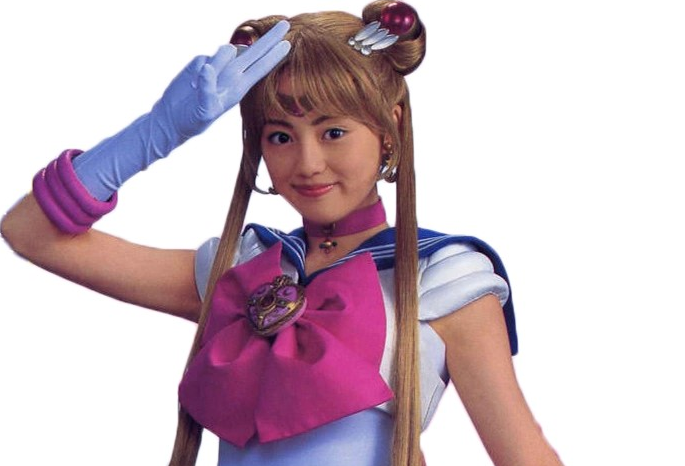
With the recent western release of Sailor Moon Cosmos, I thought now was the perfect time to talk about one of my favourite, lesser-known adaptations and my introduction to the franchise: the live action show. I’m not talking about the 1995 American remake attempt; I’m talking about PGSM, or “Pretty Guardian Sailor Moon”, which celebrated its 20th anniversary in 2023.

What is Pretty Guardian Sailor Moon?
Produced by the Toei Company, Pretty Guardian Sailor Moon hit Japanese screens in October 2003 on the Japan News Network and Chubu-Nippon Broadcasting. A retelling of the Dark Kingdom arc, it veered between the known lore and the entirely new, providing fresh takes on beloved characters, and adding extra plotlines never before seen in the manga or the anime. The series ran for 49 episodes, a Special Act, three standalone “ACT ZERO” shorts, and a “Making Of” episode. There was even a “Super Dance Lesson” choreography video and a live stage show called “Kirari Super Live” which was performed in 2004 after the show’s completion.
Something I learned in writing this article is that there was also a 20th anniversary reunion with the five main cast members. More on that later, but I thought it worth mentioning here, because I was so happy that the show is still loved and known enough to call for such a special event.

“Kirari Super Live” featured various songs from the series, questionable fashion choices, and some excellent audience participation from the Dark Kingdom. There’s even an upbeat finale where everyone gets to sing the theme song together. It’s worth a watch if you need something to make you smile today.
A Little Nostalgia for the 2000’s AMV Era
“Kirari*Sailor Dream!” by Sae was the opening theme for the show, and never fails to make me feel nostalgic with just the first note. It’s probably my favourite Sailor Moon opening theme, tied for first with the OG classic: DALI’s Moonlight Dentetsu. One look at this, and you know exactly what you’re in for.
As a 90s kid, I genuinely don’t know how I missed out on the famous DiC dub; I just don’t remember seeing it on the TV guide when I was growing up in the UK. I’d heard of Sailor Moon, but that was about it; I didn’t actually see the anime until my late teens, and I think I only made an effort to look for it because I’d loved the live action so much. As for PGSM, I saw clips of it by chance during my AMV (Anime Music Video) era, and eventually tracked down the entire series.
I binged it, naturally. And I loved every second of it.
And yes, I made an AMV or three.

Sailor Venus/Aino Minako (Komatsu Ayaka), Sailor Moon/Tsukino Usagi (Miyuu Sawai), Sailor Jupiter/Kinoto Mako (Azama Mew), Sailor Mercury/Mizuno Ami (Izumi Rika), Sailor Mars/Hino Rei (Kitagawa Keiko).
For many who know about it, the live action adaptation is sometimes treated as a joke entry in the series, whereas others (like me) still hold it in high esteem. I can see why some might think it hasn’t aged too well. However, I would argue against the claims that it’s in any way unserious.
With the heavily CGI transformation sequences and effects, the crazy amount of somersaults, the Power Rangers style monsters, and the senshi’s Bandai accessories that were blatantly designed to sell toys, it’s definitely an acquired taste. But if you’re able to look past (or better yet, appreciate) these earmarks of the Tokusatsu genre, you’ll find a very memorable, heartwarming drama with characters you genuinely want to root for.
For me, at twelve years old, they were the friend group I wished I’d had.
Not a Silver Millennial? Here’s the Rundown

Tsukino Usagi, Luna, and Mizuno Ami
Tsukino Usagi is a 14-year-old girl who lives an ordinary Middle School life. She’s kind of a klutz and her grades suck, but she has a good heart and a knack for drawing people to her. One morning, Usagi encounters Luna: a cat with a crescent moon on her forehead, who tells Usagi that she’s not just any girl–she’s the guardian of justice, Sailor Moon.
As Usagi learns to accept and use her powers, she finds other Sailor Senshi like her (Mercury, the girl genius; Mars, the shrine maiden with mysterious powers; Jupiter, the tough tomboy with a sensitive side; and Venus, the idol). These girls are all kind of rejected by their peers for their own reasons, but Usagi helps them feel less like outcasts.
Together they protect unwitting civilians from attacks by the Dark Kingdom: a group of very pretty generals (Jadeite, Kunzite, Nephrite, and Zoisite) managed by a red-hot mommy of an evil queen, Beryl. Beryl looks every bit the Big Bad of the series, but the real CEO of evil is Queen Metallia, an evil pink light (in the live action) who feeds on human energy and wants to destroy earth. Beryl hopes to find a mystical “silver crystal” to reawaken Metalia to her full power. Also in search of this crystal is a jewel thief who calls himself Tuxedo Mask, who always turns up at the perfect time to save Sailor Moon from harm.
I know it’s a lot to take in. But trust me: it’s a good time, whatever your preferred adaptation is. The series is iconic for a reason, and it’s not just for the flashy animations and pretty costumes. There’s this wonderful feeling of ‘with your friends beside you, you can overcome anything’ that permeates the series, and it’s truly the relationship between the girls that brings me back time and time again.
Also, you know… there’s cats.

For PGSM, Luna and Artemis were brought to life with a combination of stuffed animals and CGI. It definitely shows its age and feels very… experimental, but I thought the approach was unique. Whether they were being carried like handbags or awkwardly shuffling onscreen, I loved seeing them. That might be me falling for blatant marketing though, because it’s 20 years later and I still want one of each.
How Does the PGSM Live Action Compare to the Sailor Moon Anime Adaptations?
As adaptations go, Pretty Guardian Sailor Moon starts out very loyal to the source material, with a couple of exceptions. It’s in the second half that things get wild, and I love the individuality that these creative choices give it. My standout differences between PGSM and the manga/anime are:
- Minako is already a popstar, which is busy enough by itself, but she’s struggling with a secret that keeps her from being present for a lot of the series. This all comes to a head towards the end of the series in a heartrending performance I will never forget.
- Usagi and Mamoru’s relationship is given more opportunity to grow, and is conveyed in a way that actually makes me feel for them. The time they have together feels so bittersweet, helped by a masterful use of quiet moments, longing stares, and lighting choices.
- Throughout the series, we see Usagi process blow after blow; the news about her past life, Mamoru’s relationship, his kidnapping, “Dark Power… make up!”, and more, and Miyuu Sawai handles it masterfully. You see her outrage when attacks are made against civilians, and you see her pain when those close to her are hurt. I can personally find anime Usagi a bit shrieky and cloying at times, especially in Crystal, but PGSM Usagi I just want to hug. I want to make her a hot chocolate and tell her it’s going to be okay, but I don’t need to–she has a loving mother and wonderful friends at her side already, and you know that whatever comes their way, they’ll handle it somehow.
- PGSM’s interpretation of Queen Beryl and the generals is my favourite, bar none. I don’t know what it is about them. Beryl’s hand choreography and crazy eye acting? Zoisite’s mysterious air and his smug little smirk? Kunzite’s initial transformation, followed by all that cape flip? Jadeite’s clean, new-boy energy? Nephrite’s need to PUNCH THINGS? They’re just so dang likeable, even with some of the terrible things they do.
- Rei and Minako have on-screen chemistry that absolutely sizzles. They both feel like natural leaders coming from different perspectives: Rei with Usagi’s best interests at heart, and Minako’s obsession with her mission.
- The Princess. The cold, quiet force that is the Princess. She’s had enough, she is angry–no, she’s furious. And she has every reason to be.
- The musical tracks have stayed with me for 20 years now. C’est La Vie is my alarm clock. Some are poppy earworms, and others are more sweet and heartfelt, but all of them bring a real flavour to the series that balance the happy and the sad so perfectly.
I could go on. And on. And on. But at this point, I think it’s best that you see it for yourself.

Behind the Scenes of PGSM: the Real Life Senshi of the Pretty Guardian Sailor Moon Live Action
Pretty Guardian Sailor Moon is overall a story about love, perseverance, and friendship, and I think those themes reflect not just the experiences of the characters, but the actresses themselves.
The cast worked so hard and so closely that the Senshi are still great friends. Real-life-senshi on Tumblr did a fantastic translation of the 20th anniversary alumni interview, which I highly recommend you watch once you’ve seen the show. I didn’t think anything could strengthen my love for PGSM, but hearing the affection with which the actresses still speak of it definitely did; they worked so hard, with the majority of them having no acting experience whatsoever, and it was very much a trial by fire. Many of them have stories of crying after being berated by the crew, and remembered how cold they felt in their Sailor fuku during the combat scenes filmed at Ajinomoto Stadium. Mars and Venus recall envying the others for having boots to hide heat packs in, and Jupiter had to do her own stunts because she was too tall for a double.
Still, despite all the difficulties of the year-long production, and at only 14 and 15 years of age, they endured together. That’s something I really respect. Just like the Senshi themselves, they formed a solid bond that encouraged them when times were hard. Even now, they still look to one another for strength when they’re feeling unsure.
What I love even more is that they still meet up regularly and talk so much that Jupiter needed to mute notifications because her phone would have an alarming amount of notifications, all from “Senshi chat”. And if you want your heart to grow three sizes, by the way, this is the song the group sang at Kitagawa Keiko’s wedding as a surprise.

Azama Mew, Izumi Rika, Miyuu Sawai, Kitagawa Keiko, Komatsu Ayaka
Consensus
Now, over twenty years later (send help, I’m located somewhere in my mid-30s), I’ve rewatched PGSM with my husband, and we’ve started watching Sailor Moon Crystal as well. As good as Crystal is, I do find there’s something missing–something so grounding, nostalgic, and undoubtedly charming about PGSM that I just can’t get anywhere else, and Miyuu Sawai’s interpretation of Usagi is absolutely magnetic. Somehow, I just can’t bring myself to like the anime versions as much.
Even though I wish we’d gotten another live action season including the Outer Senshi, I’m satisfied with the resolution that we got, and happy to appreciate the story for what it is. Sometimes silly, other times a gut-punch, PGSM proved itself capable of handling real-life issues with sensitivity and relatability. I would have loved to have seen its take on the later arcs, as I’m confident it would have done them justice. PGSM handles subject matter like loss, identity, the pressure of family expectations, death, age and love with grace, and in a way that could have proved very supportive to young viewers going through the same things. And I love it for that. Even though a part of me would’ve loved to see more, I adore it most for what it is. It feels complete, it doesn’t overstay its welcome on your screen, but you feel able to return and visit any time.
Just like any visit with a good friend.
This was my very first blog, so I hope you like it! If you did, please consider subscribing so you can be alerted whenever I post content. Thanks again for spending time with me!



Leave a Reply